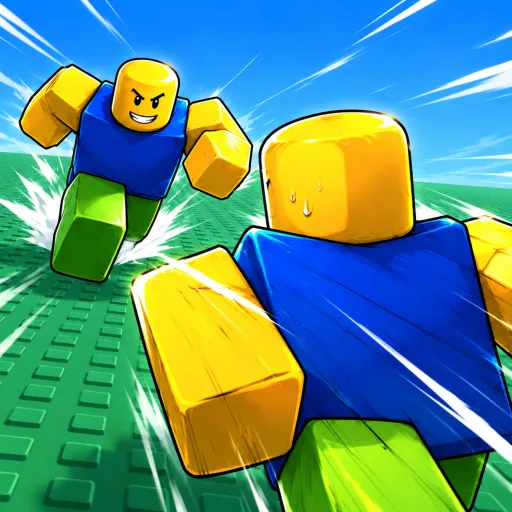
Huss Valley Chaser Practice
Improve target selection, camera tracking and decisions after a Runner turns, with specific practice goals and a chase-review table.
In this guide Jump to a section
Watch the next patch of space.
- 1Keep one target in view
- 2Read the space ahead
- 3Adjust when the route changes
Choose a target you can keep observing, then revise the approach when that target changes direction. A chase becomes difficult to judge when you lose the player, switch targets repeatedly and use an item without knowing which problem it was meant to solve.
These are editorial exercises for the Chaser role described by the reviewed match guide. This wiki has not measured attack range, hit timing or network effects, and the examples below are not claimed as observed matches.
Make the first target a deliberate choice
Ask three questions:
- Can I keep this player in view without losing the space around them?
- Can I explain the route they seem to be taking?
- Can I adjust if that route changes?
A target that looks close may be difficult to read. A farther target may be easier to follow but take longer to approach. You are comparing information and commitment, not selecting a universally best distance.
For one practice attempt, keep the selection rule simple. For example, choose a player whose movement you can observe continuously, and review when that observation became unreliable.
Watch the route as well as the avatar
Looking only at the avatar can make it harder to notice where the chase is heading. Try to relate its movement to the space it could enter next.
That does not establish a fixed lead distance for an attack. There is no measured “aim this many studs ahead” rule in this edition. Use the observation to form an approach you can update when the player turns.
When the Runner changes direction
Review what changed before immediately repeating the same approach.
| Situation | A useful question | Practice adjustment |
|---|---|---|
| You still see the Runner clearly | Has the intended destination changed? | Update the approach rather than following the old plan |
| The camera loses the target | Which camera movement preceded the loss? | Practise tracking before judging attack timing |
| Several players cross the view | Which player are you now pursuing? | Make the target choice explicit |
| You activate an item but cannot describe the result | What situation was it meant to change? | Choose a clearer trigger for the next attempt |
These adjustments are hypotheses to check. A recording may show a different cause than the one you remember during play.
When to reconsider a chase
Continuing is easier to justify when you can still describe the target, route and next action. If those observations become unclear, review whether you are pursuing a useful opportunity or simply continuing because you have already spent time on it.
Switching targets also has a cost: you need to rebuild that information. Do not switch so frequently that no attempt teaches you why it succeeded or failed.
Give an item a specific job
Before equipping a consumable, complete the sentence “I want this to change ___.” During the match, try to recognise that situation before activating it.
An item used at random gives you a weak purchase review. An item used for a clear reason lets you compare the intended effect with the observed result. See consumables for dated reports and charge checks.
Review one missed opportunity
If you record a chase, pause before the final outcome and identify:
- The target you intended to pursue.
- The destination you expected them to choose.
- The first visible change that challenged that expectation.
- The action you actually took afterwards.
Then separate the problems. Losing the target is an observation problem; knowing the target but not producing an intended action is an input problem. A purchase is not automatically the answer to either.
Choose a next-session goal
- Keep one selected target in view through a direction change.
- Describe why you switched to another target.
- Use one item for a predefined situation and review its result.
- Record a chase where the action differed from your intention, then check controls.
The Runner guide provides the other side of these route decisions. Reading both can help you formulate a better practice question without assuming that a tactic guarantees a catch.
Watch the chase. Find your next move.
Use a creator's video with the written guide and one question to check in your next session. Compare the experience and current controls before following an input.
PRO TIPS & TRICKS (Noob To PRO) in Huss Valley! ROBLOX
By ItzVexo · Published
A second community tips video selected by the reference wiki for chase advice. Use the questions below to review a sequence before copying a tactic.
- Choose one visible target and watch whether the camera keeps that player in view.
- Before a catch or miss, pause and identify the earliest decision you could change.
- Separate the result shown from a claim about range, cooldown or a guaranteed tactic.
Selection & review notes
Selected from the linked reference article. YouTube metadata and embed availability checked October 12, 2026; the footage and its gameplay claims have not been independently reviewed. The prompts are our viewing checklist, not verified video chapters.
Reference article that selected this videoMetadata checked . Video rights belong to the creator.
Click “Load video” to load YouTube's player; videos do not autoplay. If a player is unavailable, use “Open on YouTube”. Titles and availability were checked; gameplay claims still need verification.
Sources & image credits
Reviewed 11 Oct 2026. A source review is not an in-game test. Dated screenshots and practice suggestions are identified in the guide.
Article dated October 6. Used for reported role objectives and PC inputs. Its Alt instant-stop assertion conflicts with the cursor label in MMORocks' screenshot; some item classifications also conflict. No gameplay was performed by this project.
Artwork reused at the user's request. The source credits game art to Huss Valley Official / Roblox. Original image URLs and credits are preserved; no open licence is claimed.
Image credits (1)
Game icon artwork. Use the developer name and Roblox URL to confirm the experience.
Original image source
Reused at the user's request. Rights remain with the original owner; no open licence is asserted.
Found something different in your game? Send a correction with the experience URL, date and a screenshot.